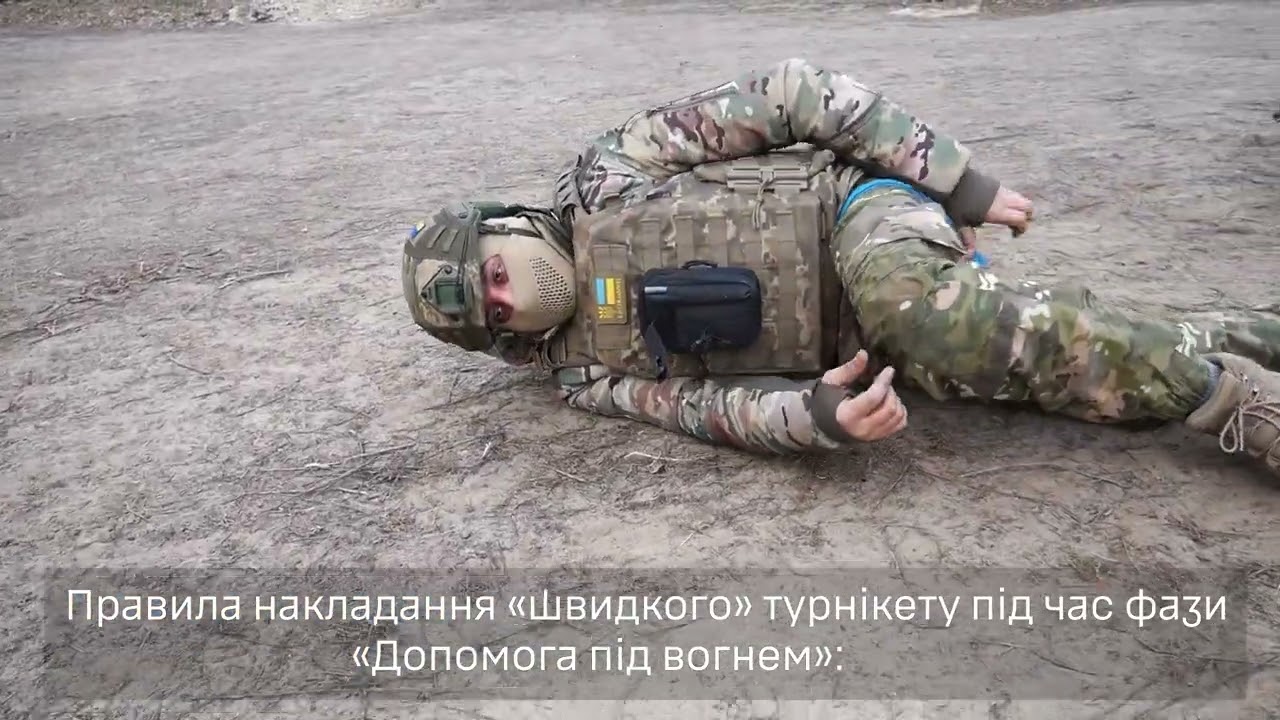
In terms of priority, this is the next type of battlefield care after self-aid. However, the realities of modern warfare—characterized by the dominance of drones equipped with drop systems and FPV (first-person view) drones—turn both the casualty and the rescuer into a collective target. Instead of occupying trenches, infantry are forced to take shelter in “burrows” (dugouts/holes), keeping only the exit under fire control.
Under these conditions, anyone wounded outside of a shelter is essentially left to provide aid to themselves. The well-known adage, “the best medicine on the battlefield is fire superiority,” becomes particularly relevant for assault groups. ✔️
Nevertheless, basic first-aid drills—despite how unrealistic their scenarios might sometimes seem—teach the following:
1️⃣ The readiness to provide first aid while under fire;
2️⃣ The casualty’s responsibility to verbally declare that they have been wounded;
3️⃣ The ability to act either upon a commander’s orders or on one’s own initiative, depending on the circumstances;
4️⃣ How to minimize the risk of being hit while approaching the casualty and performing the only feasible intervention under fire: applying a tourniquet;
5️⃣ How to visually identify signs of massive hemorrhage while approaching;
6️⃣ How to establish contact with the casualty;
7️⃣ How to conduct a rapid assessment to determine whether a tourniquet is necessary;
8️⃣ How to apply tourniquets correctly;
9️⃣ How to evacuate quickly.
☝️ Always remember: the skills you have acquired are the only things that will actually work in an extreme situation.
Special thanks to the 199th Training Center for the video. ✔️