(067) 38-76-135 >
Mon–Fri 9:00–18:00

0

Cart

No products in the cart.

Category: All Publications

  • TQ DNIPRO GEN 2: The choice of Austrian professionals!

    TQ DNIPRO GEN 2: The choice of Austrian professionals!

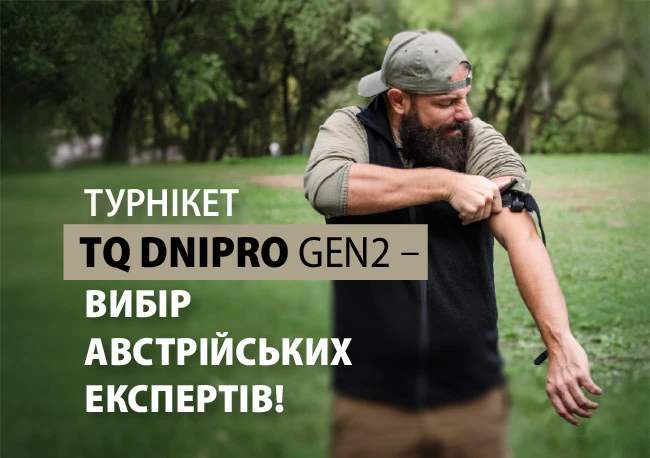
    TQ DNIPRO GEN 2 – #1 according to Austrian experts in tactical medicine!

    Authoritative testing by Critical Knowledge: The team of experts from Critical Knowledge (Austria), specializing in tactical medicine, conducted a large-scale comparative testing of tourniquets. The study involved 10 of the most popular models, including those recommended by the CoTCCC (Committee on Tactical Casualty Care). The results were published in the authoritative Austrian magazine Ranger.


    TQ DNIPRO GEN 2 is the undisputed leader: According to the test results, the TQ DNIPRO GEN 2 tourniquet took the first place! Experts noted its reliable design, well-thought-out details and minimal discomfort for the user. This victory confirms the high quality and efficiency of TQ DNIPRO GEN 2 in real conditions.

    Advantages of TQ DNIPRO GEN 2: Why did TQ DNIPRO GEN 2 become the leader? Here are the key factors:

    • Robust design: The tourniquet is designed for extreme situations and guarantees reliable bleeding control.
    • Thoughtful details: Every detail of the TQ DNIPRO GEN 2 is designed with practical experience and user needs in mind.
    • Minimal discomfort: The design of the tourniquet ensures the most comfortable use, which is an important factor in stressful and time-limited situations. Conclusion : The TQ DNIPRO GEN 2 is not just a tourniquet, it is a tool trusted by professionals. The test results from Critical Knowledge and the publication in Ranger magazine are a clear confirmation of the high quality and efficiency of this product.

    PDF-версія статті містить повну таблицю порівняння всіх 10 протестованих турнікетів, а також докладні коментарі експертів.Завантажити PDF.

  • Survived with a Mummified Arm. Infantryman of 57th OMBr “ALEX”
    Featured Video Play Icon

    Survived with a Mummified Arm. Infantryman of 57th OMBr “ALEX”

    In this video, we share the incredible story of Alex — a soldier who sustained severe injuries on the battlefield. Thanks to the timely application of the “Dnipro” tourniquet, he was able to hold on for 24 days until evacuation. We show how this tourniquet works, why it is critical to know how to apply it properly, and how it saves lives in critical situations. This video will be invaluable for military personnel, medics, volunteers, and anyone interested in tactical medicine and pre-hospital first aid.

  • Practicing evacuation skills using TQ DNIPRO tourniquets
    Featured Video Play Icon

    Practicing evacuation skills using TQ DNIPRO tourniquets

    199th Training Center of the Air Assault Forces. Practicing evacuation skills and providing aid to the wounded in conditions simulating combat, using TQ DNIPRO Gen2 training tourniquets 🟦

    We are glad to contribute to the training process✔️

    TQ DNIPRO tourniquets save lives🛡️

  • Applying the DNIPRO TQ to a lower limb
    Featured Video Play Icon

    Applying the DNIPRO TQ to a lower limb

    Applying a DNIPRO TQ to a lower limb

    DNIPRO TQ training tourniquets allow for effective practice, with the ability to verify proper application on the limbs.

    We appreciate the feedback from instructors at the training center of a military unit! 💙💛

    Would you like to train as well?
    Order via our website: www.tqdnipro.com

  • Mutual aid “under fire”
    Featured Video Play Icon

    Mutual aid “under fire”

    In terms of priority, this is the next type of battlefield care after self-aid. However, the realities of modern warfare—characterized by the dominance of drones equipped with drop systems and FPV (first-person view) drones—turn both the casualty and the rescuer into a collective target. Instead of occupying trenches, infantry are forced to take shelter in “burrows” (dugouts/holes), keeping only the exit under fire control.

    Under these conditions, anyone wounded outside of a shelter is essentially left to provide aid to themselves. The well-known adage, “the best medicine on the battlefield is fire superiority,” becomes particularly relevant for assault groups. ✔️

    Nevertheless, basic first-aid drills—despite how unrealistic their scenarios might sometimes seem—teach the following:
    1️⃣ The readiness to provide first aid while under fire;
    2️⃣ The casualty’s responsibility to verbally declare that they have been wounded;
    3️⃣ The ability to act either upon a commander’s orders or on one’s own initiative, depending on the circumstances;
    4️⃣ How to minimize the risk of being hit while approaching the casualty and performing the only feasible intervention under fire: applying a tourniquet;
    5️⃣ How to visually identify signs of massive hemorrhage while approaching;
    6️⃣ How to establish contact with the casualty;
    7️⃣ How to conduct a rapid assessment to determine whether a tourniquet is necessary;
    8️⃣ How to apply tourniquets correctly;
    9️⃣ How to evacuate quickly.

    ☝️ Always remember: the skills you have acquired are the only things that will actually work in an extreme situation.

    Special thanks to the 199th Training Center for the video. ✔️

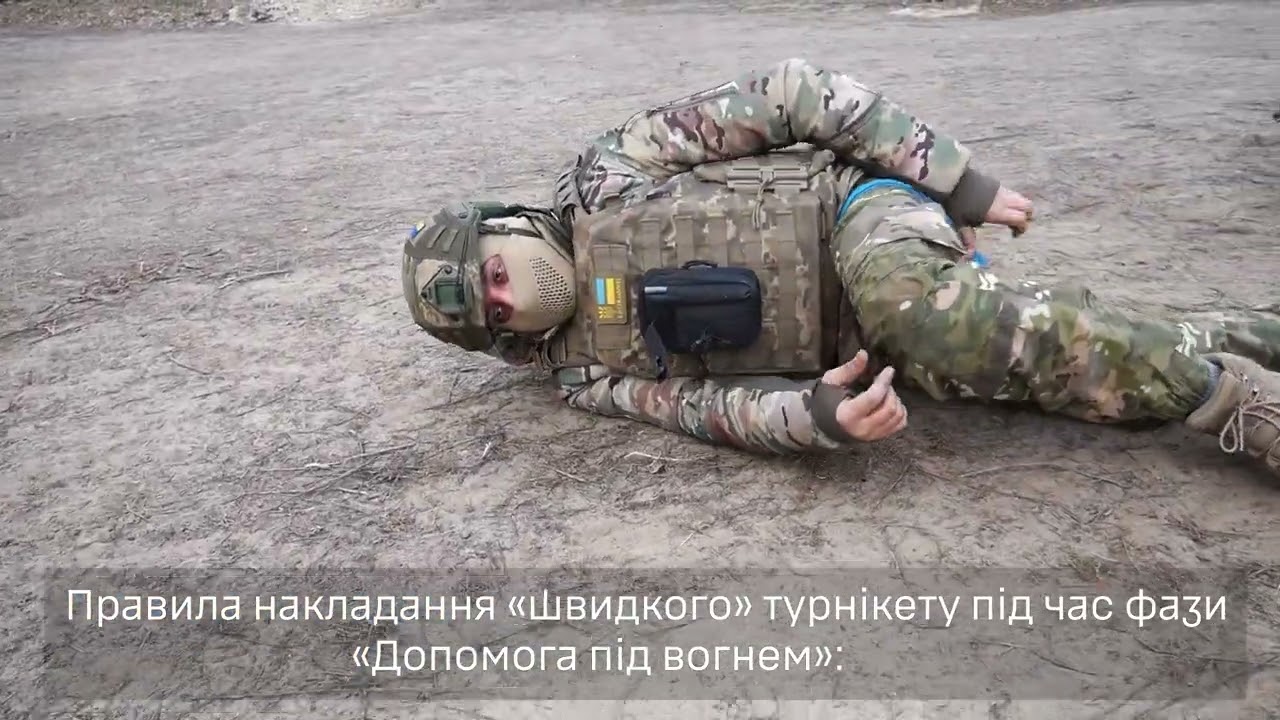
  • Self-aid. “Quick-application tourniquet.” Care under fire.

    Self-aid. “Quick-application tourniquet.” Care under fire.

    “In a critical situation, you will not rise to the level of your expectations; instead, you will fall to the level of your capabilities.” This well-known adage underscores the necessity of constantly practicing your skills—especially self-aid on the battlefield, which is the top priority during the “Care Under Fire” phase.

    Push yourself to physical exhaustion! Only then can you approximate the physical state and the loss of spatial awareness experienced by a wounded person.

    🔸Make the “first pass” tight—pull it hard! Pull as if this is your one and only chance to stop the bleeding and save your life!
    🔸Twist the windlass until it stops, then give it another half-turn!
    This must become a single, fluid motion—one seamless action!

    Train! Don’t let the enemy kill you.

    The video demonstrating tourniquet application is provided by the 199th Training Center.

  • TQ Dnipro at Milipol Paris 2025

    TQ Dnipro at Milipol Paris 2025

    In November 2025, TQ Dnipro will participate in Milipol Paris 2025, one of the world’s key events for homeland security and defense technologies.

    We will showcase our range of Ukrainian-made tourniquets TQ Dnipro, pouches, medical kits, and evacuation stretchers — all certified, field-tested, and listed in international medical device registers. Our team will share experience in developing and producing tactical medical solutions that save lives on the front line.

    Participation in Milipol Paris 2025 is not only a chance to present our innovations but also to strengthen cooperation with European distributors and humanitarian partners. We believe Ukrainian tactical medical solutions deserve their place in the global safety ecosystem.

    Visit our booth at Paris-Nord Villepinte, 18–21 November 2025, and experience the reliability of TQ Dnipro products firsthand.

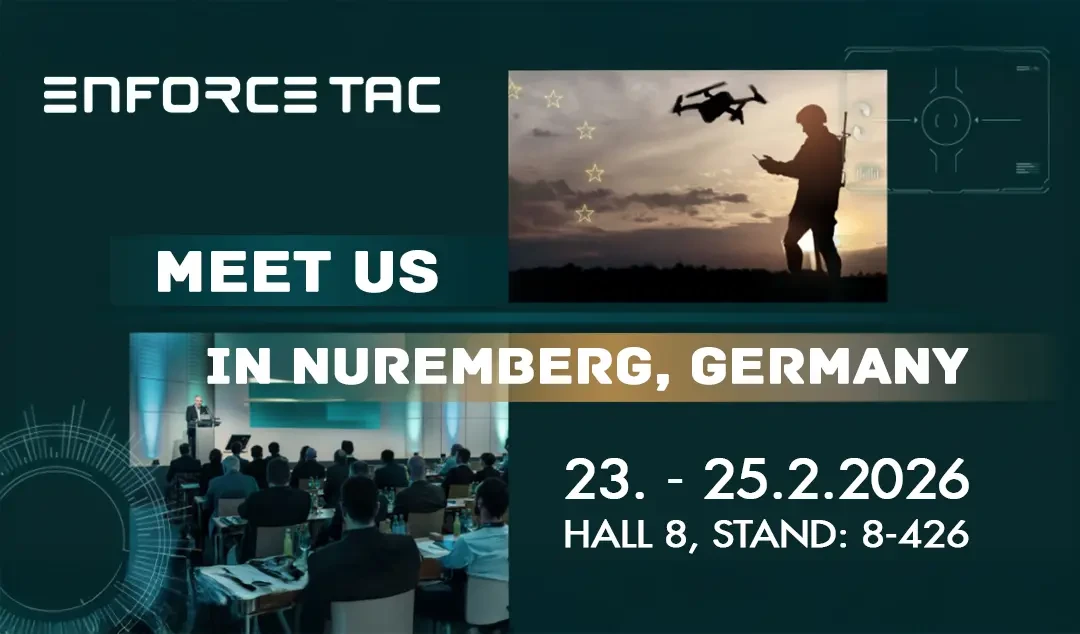
  • For the second year in a row, we participated in the Enforce Tac international exhibition, which took place on February 23–25 in Nuremberg.

    For the second year in a row, we participated in the Enforce Tac international exhibition, which took place on February 23–25 in Nuremberg.

    Enforce Tac is a leading European B2B exhibition for security and defense professionals: representatives of the armed forces, law enforcement agencies, special units, rescue services, as well as manufacturers and suppliers of specialized equipment.

    Format: admission for registered participants, professional meetings, presentations of new developments, and establishment of international cooperation.

    Our company successfully participated in the Enforce Tac international exhibition in Nuremberg, presenting new products in our range and our main product – TQ DNIPRO Gen2 hemostatic tourniquets.

    This event was a valuable professional experience for us, a platform for meaningful meetings and the exchange of expert opinions with representatives of the security and defense sector from different countries.

    In addition to presenting our own products, we made new high-quality contacts, held productive negotiations, and laid the foundation for long-term international partnerships. We would like to thank everyone who visited our stand for their trust and interest in our products.

  • TQD on Intersec 2026 | Dubai

    TQD on Intersec 2026 | Dubai

    This month, our company will be part of the world’s leading exhibition in the field of security, fire protection, and cybersecurity, which has been bringing together key industry players for the 27th consecutive year.

    This is where the following gather:

    ▪️ international manufacturers and technology leaders

    ▪️ system integrators and distributors

    ▪️ corporate and government customers

    ▪️ executives and decision-makers who influence procurement and security standards

    📍 Dubai World Trade Centre

    📅 January 12-14, 2026

    Stay tuned for our updates — we will share details about our participation and meetings at the exhibition very soon! 💯

  • Hemostatic tourniquets in extreme conditions

    Hemostatic tourniquets in extreme conditions

    In an emergency, life can be a matter of seconds, and your equipment needs to work flawlessly. However, extreme conditions, such as extreme cold, heat, or heavy rain, can significantly affect the effectiveness of even the highest quality equipment, including hemostatic tourniquets. Tourniquets are often used in the most difficult circumstances – on the battlefield, in a natural disaster zone, or in emergency medicine. That is why it is important to understand how they react to various environmental factors and what can be done to ensure that their functionality remains stable. In this article, we’ll take a closer look at how tourniquets work in conditions that can push them to their limits.

    Impact of extreme conditions on tourniquet performance

    Extreme conditions pose numerous challenges to the materials and design of tourniquets, which can affect their ability to stop bleeding quickly and effectively. For example, in cold climates, tourniquets can lose their flexibility due to a drop in temperature, making it difficult to apply them correctly. Freezing of mechanisms such as buckles or screws can render them inoperable at a critical moment. Heat, on the other hand, contributes to the accelerated wear of materials, especially synthetic fabrics, and can weaken connecting elements. Humidity and contaminants, such as dirt or sand, can block the tightening mechanisms, reducing the effectiveness of the hemostatic barrier or even disabling it completely. These issues need to be taken into account both when selecting a tourniquet and when using it in the field. Thorough testing and training can significantly reduce the risks.

    Peculiarities of using tourniquets in different climatic conditions

    The variety of climatic conditions creates specific challenges for the use of tourniquets. Each situation requires taking into account different factors that affect the materials, mechanisms, and performance of the equipment.

    Cold climate

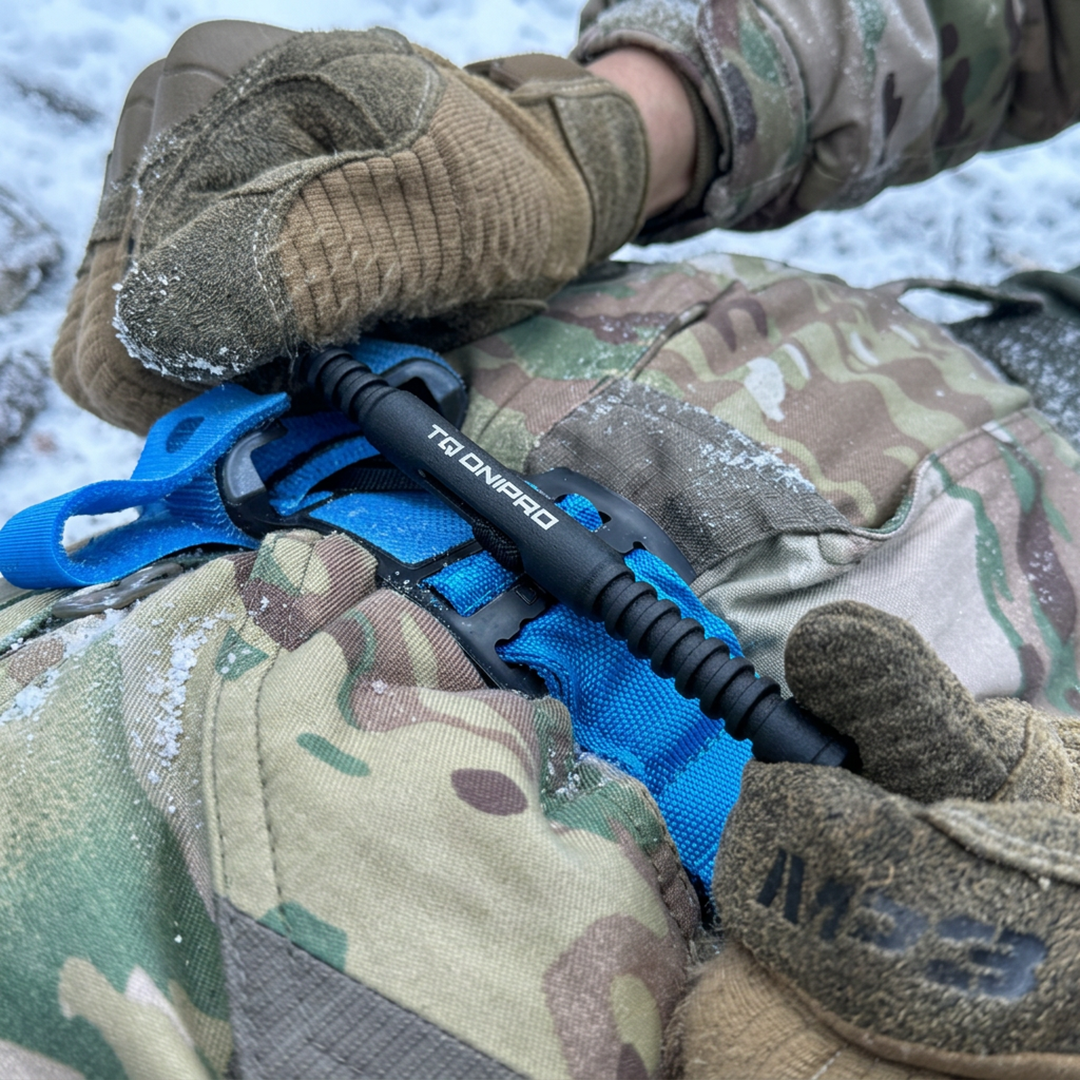
    At low temperatures, tourniquet materials often lose their elasticity. This applies to both synthetic fabrics and plastic components, which can become brittle. In such conditions, the application of the tourniquet becomes more difficult, as the stiffness of the materials makes the process less accurate and requires more effort. The frozen hands of both the victim and the person providing assistance can become an additional obstacle. To avoid these problems, it is important to choose tourniquets made of frost-resistant materials and to train with gloves on. By the way, we have conducted tests on the stress resistance of tourniquets to cold climates. Learn more in the video.

    High temperatures

    In hot climates, the tourniquet materials are subject to thermal wear. Constant exposure to high temperatures can cause fabrics to delaminate and fasteners to loosen. Tourniquets made of lower-quality materials often lose their strength and durability, which increases the risk of failure at a critical moment. For such conditions, it is necessary to choose products with heat-resistant properties and regularly check their condition.

    Humid environments

    High humidity, frequent rains or exposure to water can negatively affect the efficiency of tourniquets. Water penetrates the fabrics, increasing the risk of stretching, and metal components can rust. Dirt and sand that gets into the mechanisms can also block their operation or act as a damaging abrasive. If the tourniquets are intended for use in wet conditions, they should be equipped with water-repellent coatings and simple mechanisms that can be easily cleaned of dirt.

    Difficult conditions on the battlefield

    The battlefield is a combination of various extreme conditions: high and low temperatures, high humidity, pollution and mechanical damage. The tourniquet must demonstrate maximum versatility and reliability in such conditions. Soldiers should thoroughly test the equipment before using it, making sure it can withstand any tests. Additionally, it should be borne in mind that tourniquets that have not been certified for combat conditions may not be effective.

    Recommendations for preparing hemostatic tourniquets for extreme conditions

    First of all, you should pay attention to tourniquets that have been certified for use in extreme conditions. They must be made of durable materials that are resistant to temperature extremes, moisture, and mechanical damage. It is important to check the manufacturer’s recommendations and feedback from users who have used the tourniquets in difficult conditions. The skills of quick and correct application of a tourniquet are also critical. Training should take into account the specifics of the climate: for example, applying with gloves, in a humid environment or with limited visibility. Regular practice will help you act confidently even in stressful situations.

    Tourniquets should be stored in places that are protected from excessive humidity, extreme temperatures and direct sunlight. It is recommended to use waterproof bags or special covers for transportation. In difficult conditions, one tourniquet may not be sufficient, so it is recommended to have additional pieces of equipment, especially if you are expected to stay in the risk zone for a long time. Before each use, check the mechanisms for serviceability, integrity of materials, and absence of damage. If any defects are found, the tourniquet should be replaced. Following these recommendations will significantly increase the efficiency of tourniquets in extreme conditions and help save lives in critical situations.

    Preparedness for any challenges

    Awareness of the importance of quality equipment and proper training are key to the successful use of tourniquets in difficult conditions. Among the modern solutions, we offer the TQ Dnipro Gen 2 model, which is designed to withstand the toughest operating conditions. Thanks to the use of high-quality materials and proven mechanisms, this tourniquet ensures reliability even in the most difficult climatic situations.

PRODUCT CATALOG BECOME A PARTNER
SELECTED
DOWNLOAD CATALOGUE Information
Contacts
Store address
Dnipro city
Phone
0800 35 36 28
Schedule
Mon–Fri 09:00–18:00